COLD WEATHER,
NO WORRIES.

You're 20 minutes into your commute. The range has dropped 40km. You've only driven 15. Nothing's wrong with your car. Cold weather simply changes how batteries work, and once you know why, it's easy to stay ahead of it.
Article
5 min read
Canadian Edition

It's not just you

The number is a prediction, not a promise

Every EV owner notices this moment, and every one of them keeps driving. It is physics, and it is temporary.

The range number on your dashboard is not a fixed measurement. It is a live prediction, constantly recalculated based on how hard the motor is working, how much energy the cabin heater is drawing, and how cold the battery is. When you pull out of a cold driveway with the heat on full, the car sees high energy demand and adjusts the estimate accordingly. That is not a warning. That is the system working exactly as designed.

As you drive and the battery warms up, and as your energy use settles into a rhythm, the number will often start to recover. It will not climb back to a summer figure on a genuinely cold day, but the sharp early drop is the prediction catching up to conditions, not a sign that something is wrong.

Drivers across Norway, Sweden and Finland have been living with this through real winters for years. The cars work. The number does what it is supposed to do.
Nordic
Social Proof
Norway
96%
of all new cars sold in 2025 were fully electric
Denmark
66%
EV share of new car sales, Jan–May 2025
Sweden
60%
EV share of new car sales, Jan–May 2025
Finland
56%
EV share of new car sales, Jan–May 2025
Canadian
Field Data
Range loss
14–39%
CAA Canadian winter test, real-world conditions
Cabin heating draw
26%
Extra energy at -18°C, per U.S. Dept. of Energy
Vehicles tested
14EVs
Driven Ottawa to Mont-Tremblant in sub-zero temps
Test temperature
-15°C
Coldest conditions during the CAA winter drive

What is actually happening, and what you can do about it

The range prediction is sensitive to two things in cold weather, and they behave differently.

The first is energy demand. Heating the cabin in an EV draws directly from the battery. There is no waste engine heat to borrow from like in a petrol car. Highway driving at steady speed is efficient. Stop-start city driving in the cold with the heat running is a much heavier draw. The prediction reflects that in real time, which is why the number can shift noticeably during a drive as conditions change. This is the dynamic nature of the display working for you, not against you.

The second is the battery itself. A lithium battery that has been sitting in the cold overnight is not at its best. The chemical reactions that release energy slow down at low temperatures, which means the cells deliver energy less efficiently until they warm up through use. This is also why charging from very cold can be slower than you might expect. The battery management system deliberately limits how quickly it will accept charge when the cells are cold, partly to protect them, partly because cold cells simply cannot absorb energy as fast.

This is where preconditioning matters. Most modern EVs let you schedule the cabin and battery to warm up while the car is still plugged in. The energy for that comes from the grid, not the battery, so you start your drive with a warm cabin, a warm battery, and a range prediction that already reflects your actual driving conditions rather than the coldest possible moment of the day. It is not a workaround. It is the intended way to use the car in winter.

See it for yourself

Real world range estimate
463KM
0 km2026 Audi Q4 e-tron 45
Adjust your variables
What’s affecting your range
Everyday driving keeps you close to the rated range under typical conditions.
Mixed driving keeps you close to the rated range under typical real-world conditions.
Mild weather is idealBatteries perform best at 15–25°C with no heating or cooling load.
Where you can go


Habits that make the difference

The single highest-impact winter habit
Warm your car before you leave the house.
From your phone.
Most modern EVs let you warm the cabin and battery while the car is still plugged in. Start it from your phone while you get dressed. Ten minutes is all it takes. By the time you are ready to leave, your car is warm, your battery is ready, and the range number already reflects real driving conditions. This is called preconditioning, and it is the single highest-impact winter habit you can build. You are drawing heat from the grid, not your battery. Set your departure time in your EV app once and it handles everything automatically every morning.
01
Heated seats and steering wheel first, cabin heat second
Seat and steering wheel heaters warm you directly and use a fraction of the energy of blasting warm air through the vents. Use them as your default and dial down the cabin heat.
02
Precondition before you leave the house
Schedule your departure time in your EV app. The car warms the cabin and battery from the grid while plugged in, so you start every drive with a warm battery and an accurate range estimate.
03
Keep the battery above 20% in cold weather
Cold batteries at low charge deliver energy least efficiently. Keeping charge topped up gives the thermal management system more to work with.
04
Use eco mode for the first part of your drive
A cold battery benefits from a gentle start. Eco mode limits energy draw while the cells warm up, which improves efficiency for the rest of the trip.
05
Park in a garage or sheltered spot overnight
Even an unheated garage is significantly warmer than the open air on a cold night. A warmer battery at startup means better range from the first kilometre.
06
Plan charging stops around warmth
A heated mall or workplace charger means your battery arrives warmer and charges faster. On longer trips, plan stops where you can go inside rather than standing in the cold.

The right car helps too

Not all EVs handle cold the same way. Some come equipped with heat pumps, a far more efficient way to warm your cabin than resistive heating. Others have advanced thermal battery management that keeps the pack at optimal temperature before you even turn the key.

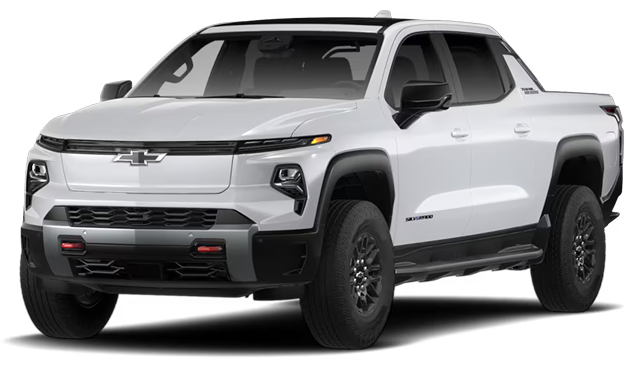
In CAA's test, the Chevrolet Silverado EV retained 86% of its advertised range in sub-zero conditions, while others fell significantly shorter. The gap between the best and worst performers was 25 percentage points. That's a real difference on a cold February morning.

Browse winter-ready EVs in our inventory →

You've got this

Cold weather is part of life in Canada. So is figuring it out. A little knowledge, a few good habits, and the right vehicle make it just another season to drive through.

Browse Winter-Ready Vehicles →

Common questions

How much range does an EV lose in Canadian winter?
Real-world testing by CAA found a range reduction of 14 to 39% in temperatures between -7°C and -15°C, depending on the vehicle and driving conditions.
Why does charging take longer in cold weather?
Cold temperatures slow down the chemical reactions inside the EV battery. Because the battery can't safely accept energy as quickly when it's cold, the vehicle reduces charging speed to protect the battery and avoid damage. Before fast charging, the car often needs to warm the battery up to an optimal temperature. Until that happens, charging is intentionally limited. This is why you may see slower charging speeds in winter. Once the battery warms up (either through driving or preconditioning), charging speeds usually return to normal.
What is preconditioning and does it actually help?
Preconditioning warms your cabin and battery while the car is still plugged in, so you're using grid power instead of battery power for heat. It's one of the most effective ways to protect your cold-weather range, and most EVs let you schedule it automatically from a phone app.
Is an EV practical in Canada year-round?
Yes, especially with home charging and a vehicle designed for cold climates. Norway, Denmark, Sweden, and Finland, where winters are long and roads are unforgiving, collectively post some of the highest EV adoption rates on earth. Cold weather and EVs are a perfectly normal combination.
Sources
U.S. Department of Energy cold weather EV study ·  CAA/BCAA EV Winter Test Drive, February 2025 ·  Norwegian Road Federation (OFV) 2025 ·  International Council on Clean Transportation (ICCT) 2025 ·  Natural Resources Canada